Sunday, June 18, 2017
Grilling tips from chefs
This article from Bloomberg is worth a read if you're into grilling. What may seem intuitive about the craft is actually not always complimentary to the food. Good stuff to know!


Tuesday, June 13, 2017
NYT Article: How to Cook Beans
Here's a great article from the New York Times cooking section on "How to Cook Beans". Check it out for some great tips!
Chickpea Tips
Here are two tips regarding chickpeas (garbanzos). I
generally cook chickpeas from scratch; this means re-hydrating them in
water overnight, then cooking for just 30 min. I learned from Alton
Brown to add 1/8th tsp. of baking soda to the peas while cooking. I'm
not sure why he suggests this, but I just do it. Then, I sometimes de-husk the peas after cooking, which is beneficial for the following
reasons: 1) It makes for a smoother hummus, 2) The peas will be easier to
digest! De-husking can be done by gently squeezing a cooked pea between
the two forefingers and thumb, the husk will slip right off. Of
course, it's tedious to do this, but the benefits are as noted, and if
you enlist help it will go faster! In a 1/2 cup dried peas, a
surprising portion is actually husk (see the picture below). It's OK to consume the husk, but
it's just fiber, with little nutritional value.
 |
| 1/2 cup chickpeas with husks on the right. |
Monday, March 6, 2017
Does it have GMOs or Not?
Here's a useful on-line Non-GMO Shopping List from the Institute for Responsible Technology. So if you're wondering if your favorite strawberry jam contains GMO fruit, this list can help!
And here's a helpful explanation from cpr.com concerning how to identify conventional, GMO, and organic foods in the grocery store.
And here's a helpful explanation from cpr.com concerning how to identify conventional, GMO, and organic foods in the grocery store.
Friday, October 28, 2016
Tulsi Tea
Here's an informative article on tulsi tea (sometimes called "tulasi", too) which is starting to make appearance in store shelves in the U.S. I've been drinking a tulsi + green tea mix from Organic India, which I like as an occasional option to pure green tea, because the mix is less bitter. You may want to try it, too; pay attention to the interaction warnings in the article, though.

Sunday, August 21, 2016
Rethinking the Corn System
Here are a couple of thought-provoking articles about America's Corn System and how it will likely have to adapt ahead. Some diversification is already being seen from local farmers who have gone organic, remained independent, and have moved forward to producing specialty crops such as pulses and legacy grains (although the total acreage involved is just the tip of the iceberg). One thing to note is the flawed approach of Big Ag's proposal to use GMOs to increase yield. Yield is not the problem; it's how the crop is used that's the issue. It's more efficient to send calories to feeding people than to feeding animals and cars.
- Scientific American, It's Time to Rethink America's Corn System
- Sustainable Table, Animal Feed
Saturday, July 2, 2016
Toothpaste
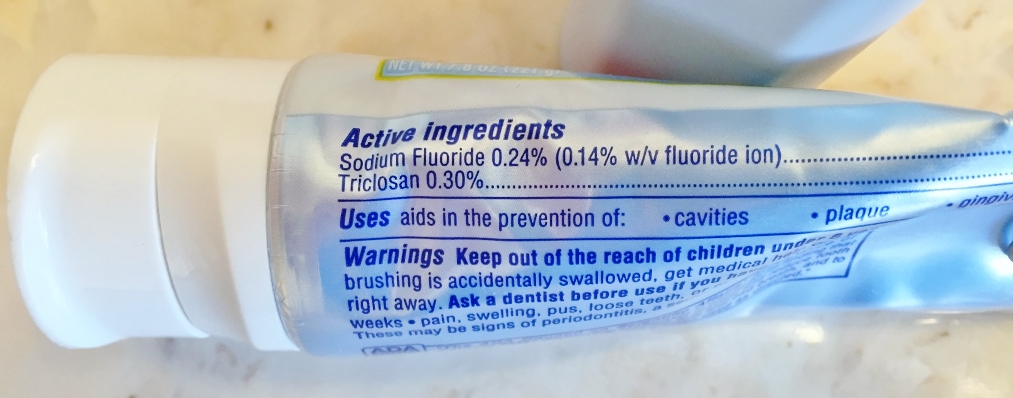
It's a really mundane topic, but have you ever read the ingredients on the box? It's typically a chemical hodgepodge, and frankly, that makes me nervous! Not to mention there's ongoing arguments over the safety of triclosan, an antibacterial additive that fell out of favor in the 1990s only to reappear in the last few years and sodium lauryl sulfate, too.

My thought is, "Use something that's efficacious yet as simple and natural as possible". But reading the ingredient list on the plethora of toothpaste options in the typical store is disturbing, as nearly all contain a long list of multi-syllable chemical compounds. Disappointingly, even Tom's of Maine is filled with complex ingredients.
In my ad-hoc and unscientific search for toothpaste options, I've opted to go with Arm & Hammer Truly Radiant. Yes, it has sodium lauryl sulfate, sodium saccharine, and sodium fluoride, but there's no ideal "all natural" option on the shelves that I've found, unless you want to use pure baking soda only. Anyway, here's a shot of the A&H if you want to check it out. Tip: Click on the pictures to zoom in; then click on the "X" at the top right-hand corner to close the zoom window.


My thought is, "Use something that's efficacious yet as simple and natural as possible". But reading the ingredient list on the plethora of toothpaste options in the typical store is disturbing, as nearly all contain a long list of multi-syllable chemical compounds. Disappointingly, even Tom's of Maine is filled with complex ingredients.
In my ad-hoc and unscientific search for toothpaste options, I've opted to go with Arm & Hammer Truly Radiant. Yes, it has sodium lauryl sulfate, sodium saccharine, and sodium fluoride, but there's no ideal "all natural" option on the shelves that I've found, unless you want to use pure baking soda only. Anyway, here's a shot of the A&H if you want to check it out. Tip: Click on the pictures to zoom in; then click on the "X" at the top right-hand corner to close the zoom window.


Saturday, June 25, 2016
Vegetarian but not clueless
A site caveat: In 2010 I switched to a vegetarian diet and most of the content here reflects that. It didn't happen over night, I was gravitating that way for a year or two. In my case, it's completely by choice, but for six years now it's been a choice that I've been happy and pleased with :-)
My point in writing this is that I understand most people are omnivores - and that's great! If you enjoy fish and meat as protein sources, there's as many good reasons for that as an all veggie diet. I'm not here to argue one way or the other, other than "Eat and enjoy what works for you!" That said, if you're open to looking at nutritional veggie-based eating options, then that's part of the adventure I'm documenting here, and I hope you'll find some useful and actionable information in the process :-)
My point in writing this is that I understand most people are omnivores - and that's great! If you enjoy fish and meat as protein sources, there's as many good reasons for that as an all veggie diet. I'm not here to argue one way or the other, other than "Eat and enjoy what works for you!" That said, if you're open to looking at nutritional veggie-based eating options, then that's part of the adventure I'm documenting here, and I hope you'll find some useful and actionable information in the process :-)
Sunday, March 27, 2016
Lemonade by the glass
We have a Ponderosa lemon tree that bears large, tart lemons throughout the year (if it had been my choice, I'd have opted for the sweeter Meyer lemon, but the tree predates us).
Anyway, here's some twists on lemonade by the glass.
Ingredients:
Note: I originally posted this recipe specifying agave syrup instead of refined sugar. At that time, I believed it was a preferable sweetener. However, recent findings indicate that agave syrup is primarily fructose-based, and since fructose isn't directly digestible by the body, it ends up being removed by the liver. So, you can use agave if you prefer it's lower glycemic index, but be aware that it puts more load on your liver, too.)
Fun twists:
Anyway, here's some twists on lemonade by the glass.
Ingredients:
- 2 - 3 Tbs fresh lemon juice (depending on how tart you like it).
- 2 Tbs sugar (be generous here, especially when working with tart lemons).
- 8 oz of chilled water
- Create your own "simple syrup" by dissolving the sugar with a few ounces of boiling water in the glass.
- Add the lemon juice.
- Add ice (or not; your choice) and top-off with chilled water.
Note: I originally posted this recipe specifying agave syrup instead of refined sugar. At that time, I believed it was a preferable sweetener. However, recent findings indicate that agave syrup is primarily fructose-based, and since fructose isn't directly digestible by the body, it ends up being removed by the liver. So, you can use agave if you prefer it's lower glycemic index, but be aware that it puts more load on your liver, too.)
Fun twists:
- Add some fresh, julienne-cut or crushed mint leaves.
- Add 1/3 glass of sparking water, which makes a refreshing spritzer.
- Add 1/4 cup dry white wine, such as Sauvignon Blanc, for a wine cooler.
Refined sugar vs. high fructose corn syrup?
Given in the course of simple existence that we will be faced with the decision, "Do I eat this product, which contains high fructose corn syrup, or find one like it that uses raw or refined sugar?" Which is the better choice? I was curious myself and found this article from HealthDay, which concludes, sugar is sugar and daily intake is what you want to manage! Seems like an obvious and intuitive conclusion - and this livestrong article backs it up.
Subscribe to:
Posts (Atom)